Research from the University of Nebraska–Lincoln’s MAARS Lab was recently highlighted by Nebraska Public Media (NPR), featuring an interview with agricultural engineer and data scientist Ehsan Fazayeli on the future of space agriculture.
During the interview, Ehsan Fazayeli shared the team’s long-term vision: enabling the first acre of plants on the surface of the Moon or Mars. While agriculture on Earth relies on soil, water, and natural ecosystems, growing plants in space introduces entirely new challenges.
In microgravity environments, water does not behave as it does on Earth. Instead of draining through soil, water and air bubbles can surround plant roots, limiting oxygen availability and potentially suffocating the plant. Additionally, lunar and Martian soils lack organic matter, microbial activity, and accessible nutrients, making traditional soil-based agriculture impractical. Martian regolith also presents toxicity concerns that further complicate its use.
To address these limitations, researchers are developing advanced hydroponic systems, where plants grow without soil and receive nutrients directly through controlled water-based solutions. These systems are combined with sensors, automation, and robotics to enable precise monitoring and control of plant growth in extreme environments.
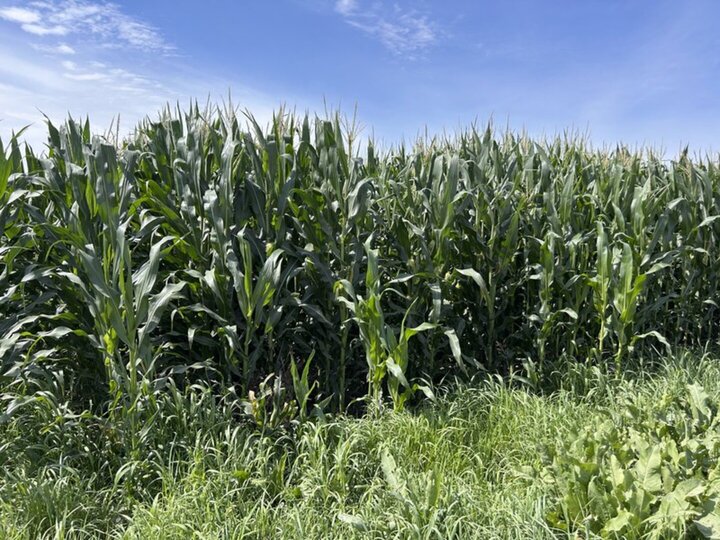
Although Nebraska is well known for corn production, Fazayeli noted that early space agriculture will likely focus on more resource-efficient crops such as leafy greens, including lettuce and kale, as well as crops like tomatoes and peppers. Beyond food production, plants will also play a critical role in life support systems by producing oxygen and helping regulate carbon dioxide levels.
The interview also highlighted two major challenges for sustaining agriculture beyond Earth: nutrient availability and energy. Essential nutrients such as nitrogen are scarce in extraterrestrial environments and difficult to transport from Earth. At the same time, controlled environment agriculture systems require reliable energy for lighting, environmental control, and automated operations.
Despite these challenges, ongoing research at UNL and other institutions is advancing the development of integrated agricultural systems designed for space and other extreme environments. These innovations not only support future space missions but also have applications for improving food production in resource-limited environments on Earth.
Fazayeli emphasized that while the goal is ambitious, it is achievable within the coming decades, with the potential to see the first acre of crops grown beyond Earth within approximately 30 years.
Read / listen to the full interview: https://nebraskapublicmedia.org/en/news/news-articles/one-giant-leap-for-farmers-nebraska-researchers-launch-idea-to-grow-corn-on-the-moon/
Date: 02/27/2026